I chose a pallet jack as the source asset because it closely reflects the type of industrial equipment Hyster-Yale produces. The model includes a mix of large structural forms, mechanical details, and manufactured surfaces, making it a good example for demonstrating how I convert CAD data into an optimized, realtime-ready asset.
Imported the STEP CAD into FreeCAD and chose a coarser tessellation (1.5 mm surface deviation, 30° angular deviation) over finer settings (0.5 mm / 20°) to avoid excessive triangle density, then exported as OBJ for Blender optimization.
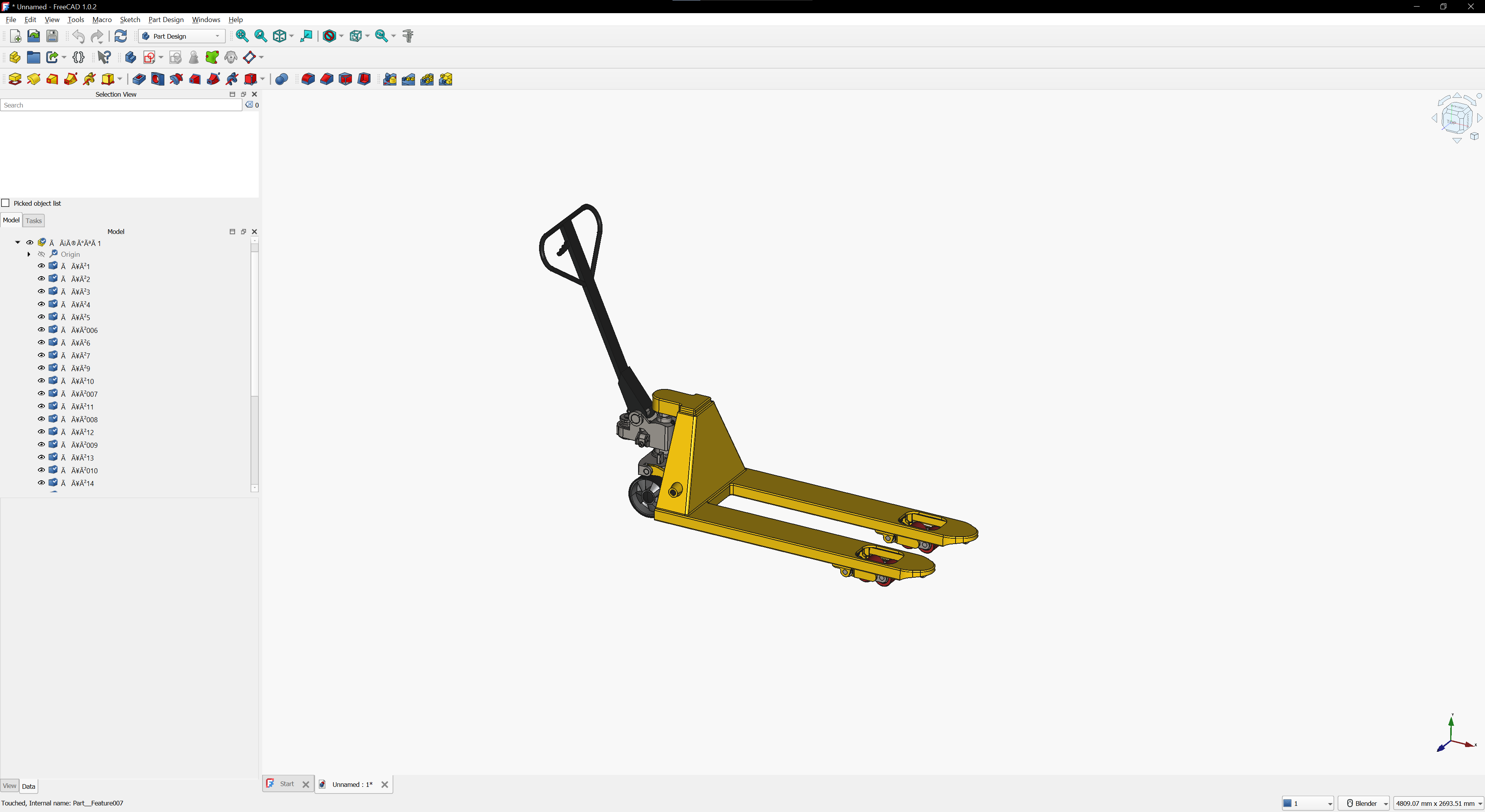
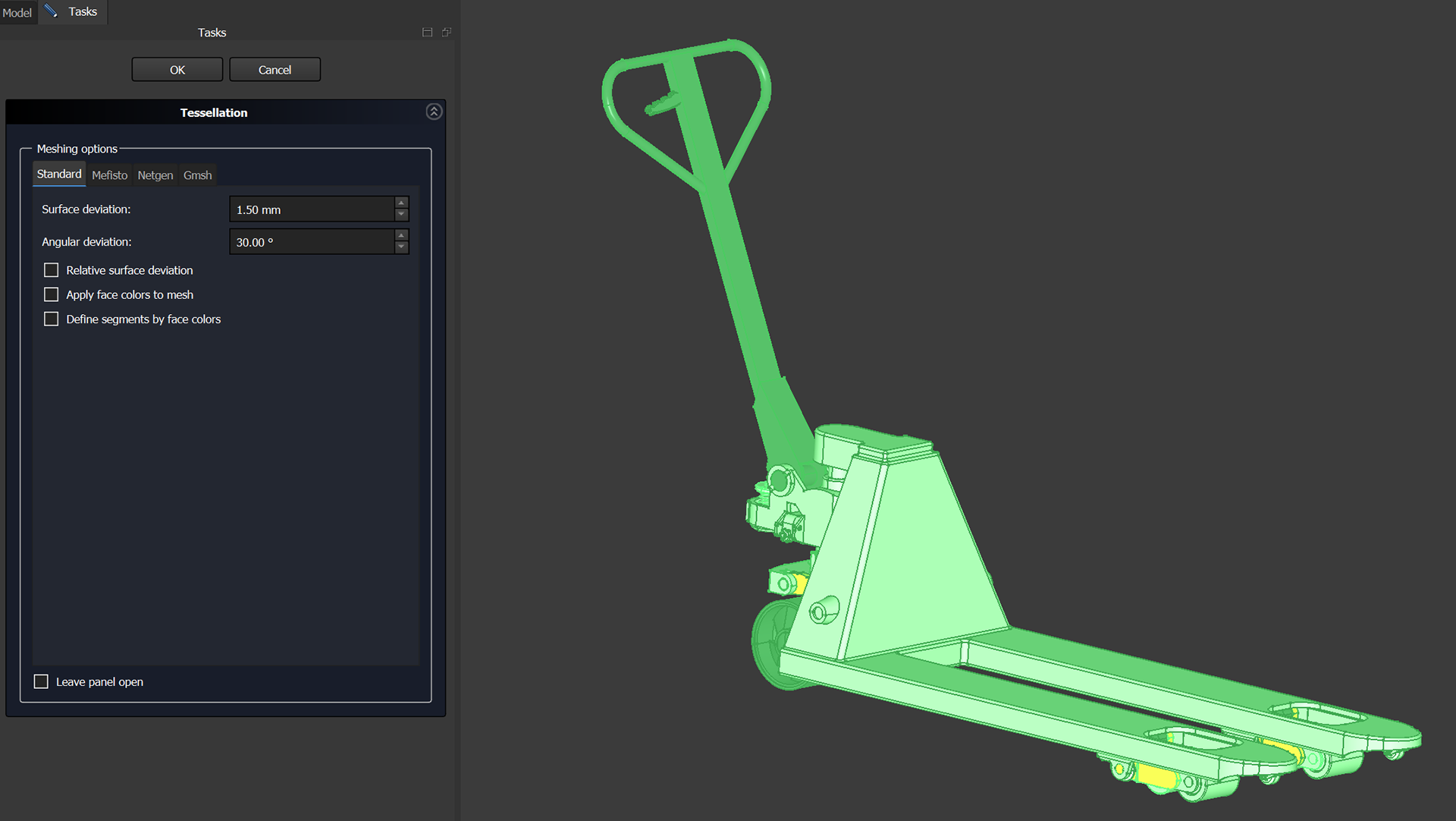
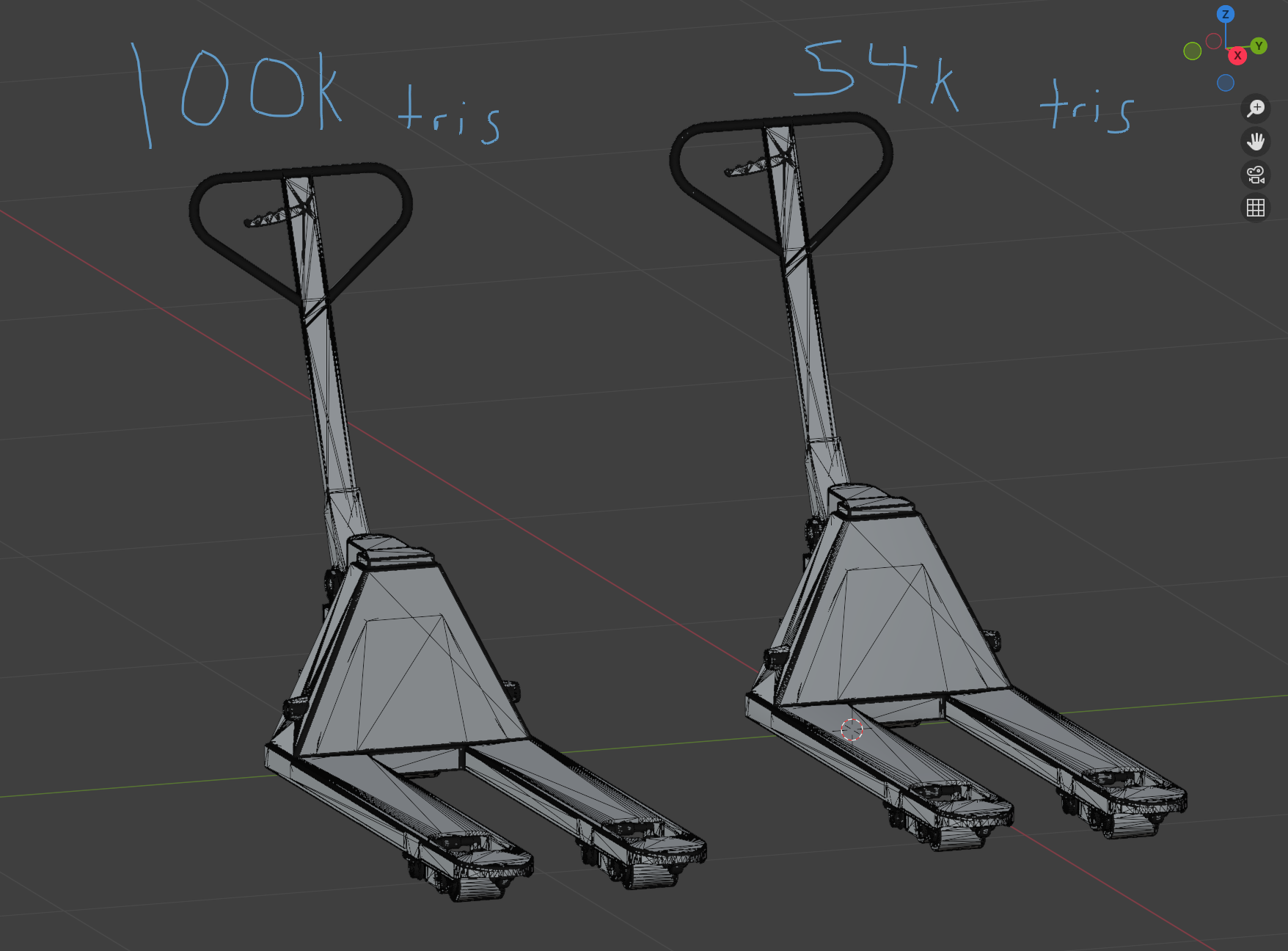
Choosing the right tessellation values saves overall time and headache. 54k tris maintains silhouette, details, and curvature with only half the geo.
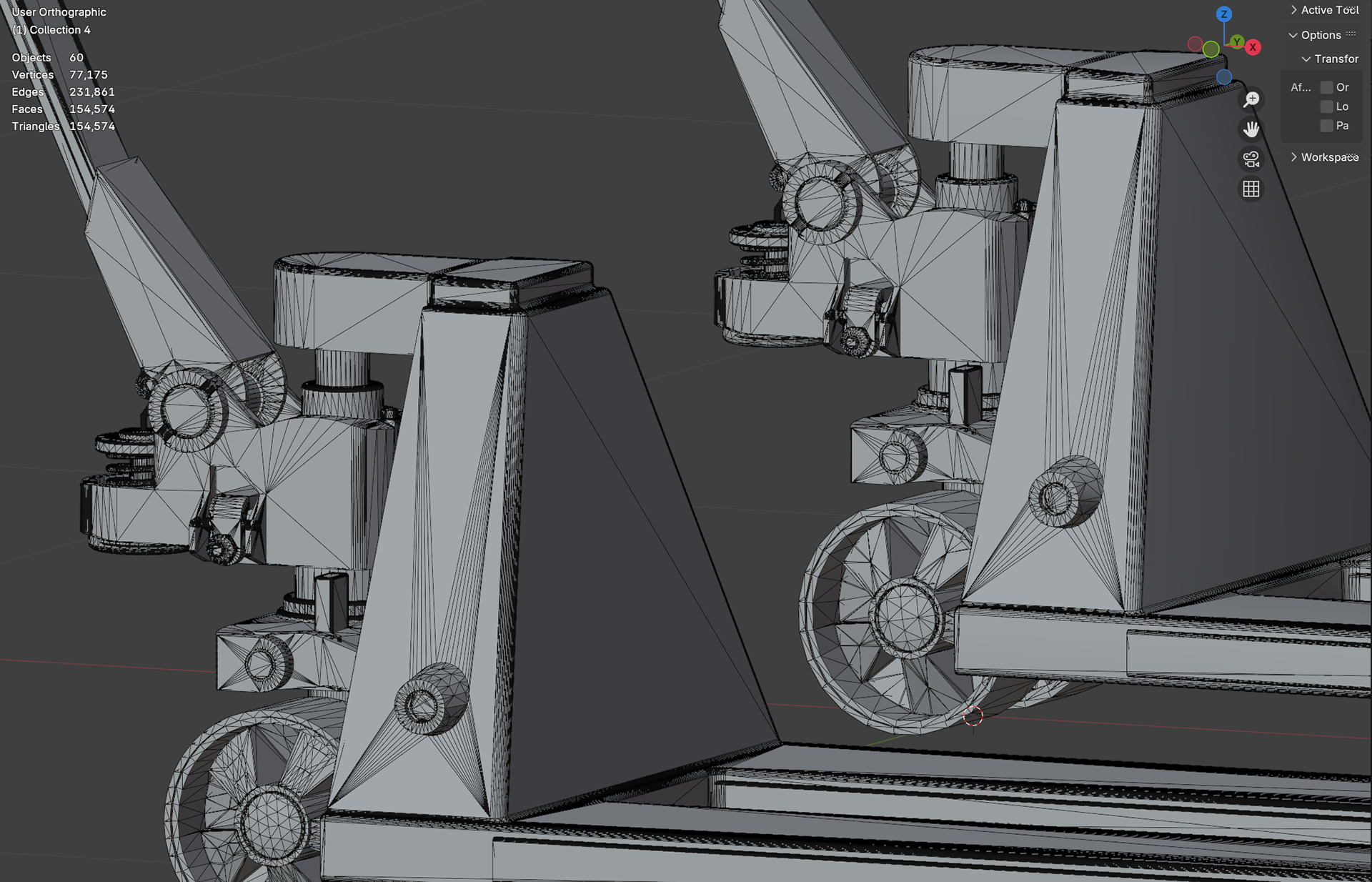
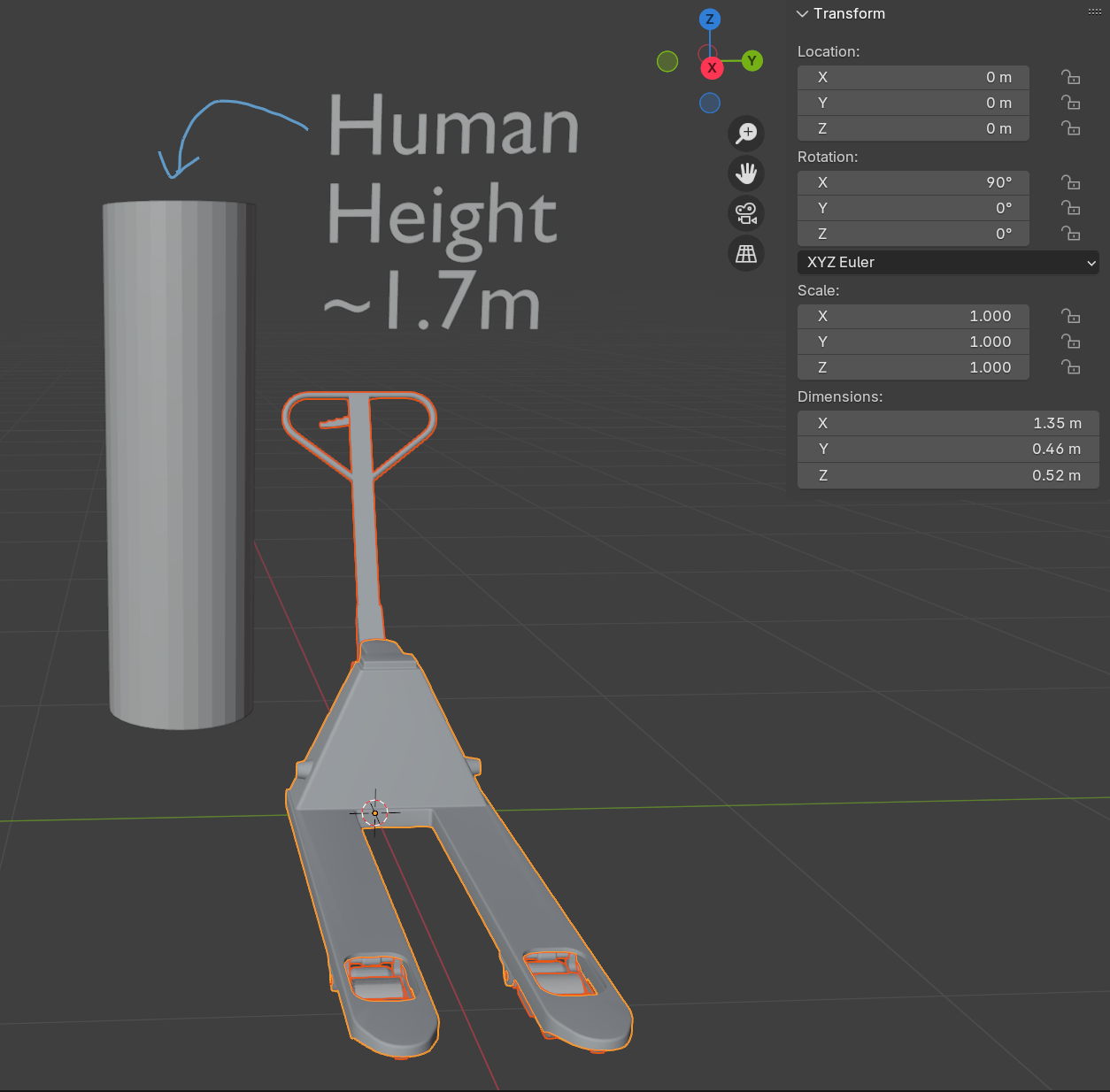
Imported OBJ at .001 scale in Blender to achieve correct size. I sometimes like to compare with a quick human-scaled cylinder for clarity. Turning on MatCap makes shading errors more obvious. It helps to show faceting, pinching, and normal issues, speeding up workflow.
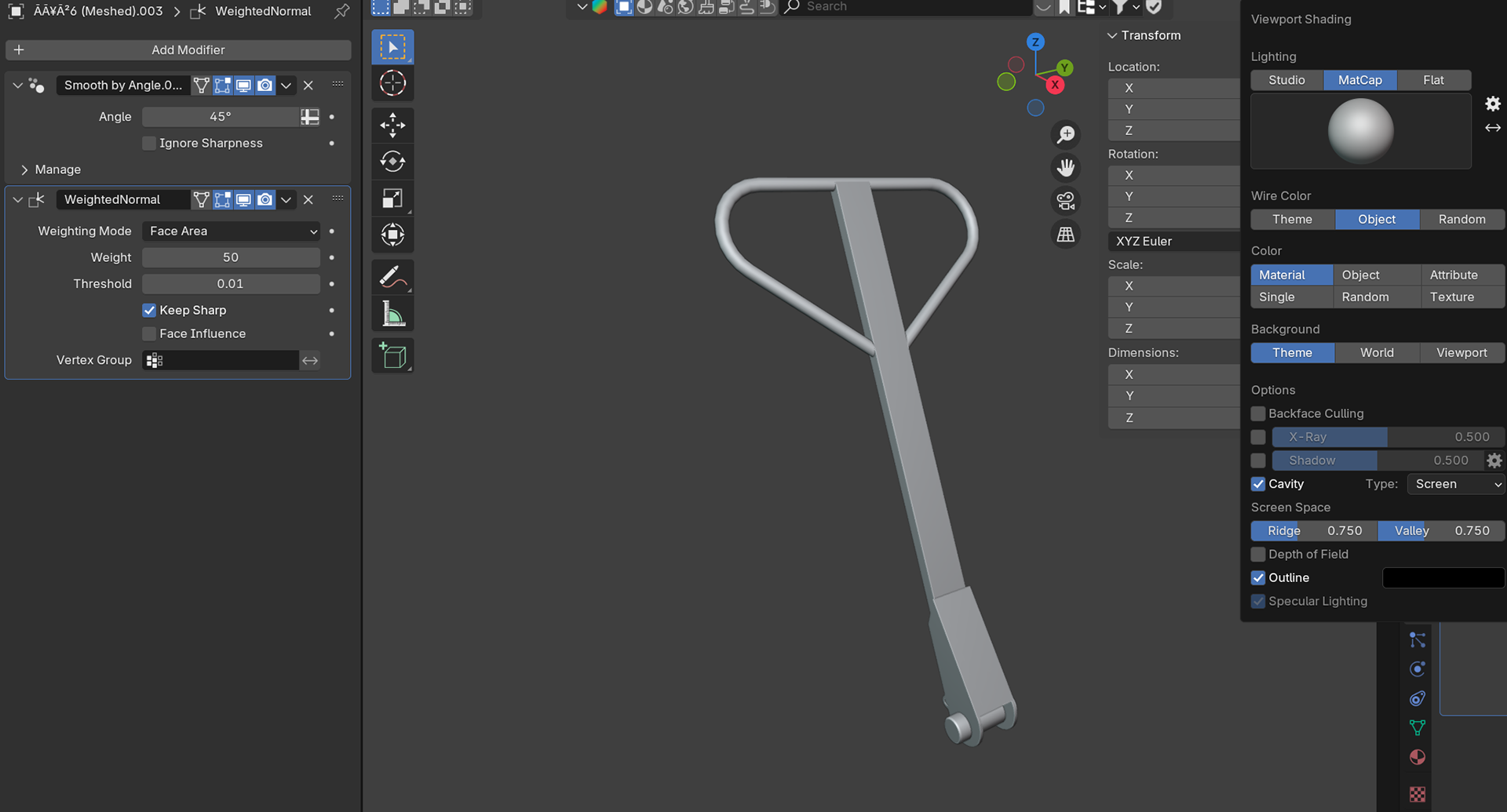
I then add a modifier stack of "Smooth by Angle" and "Weighted Normals". Backface culling and face orientation views help identify shading issues quickly while rotating in MatCap view.
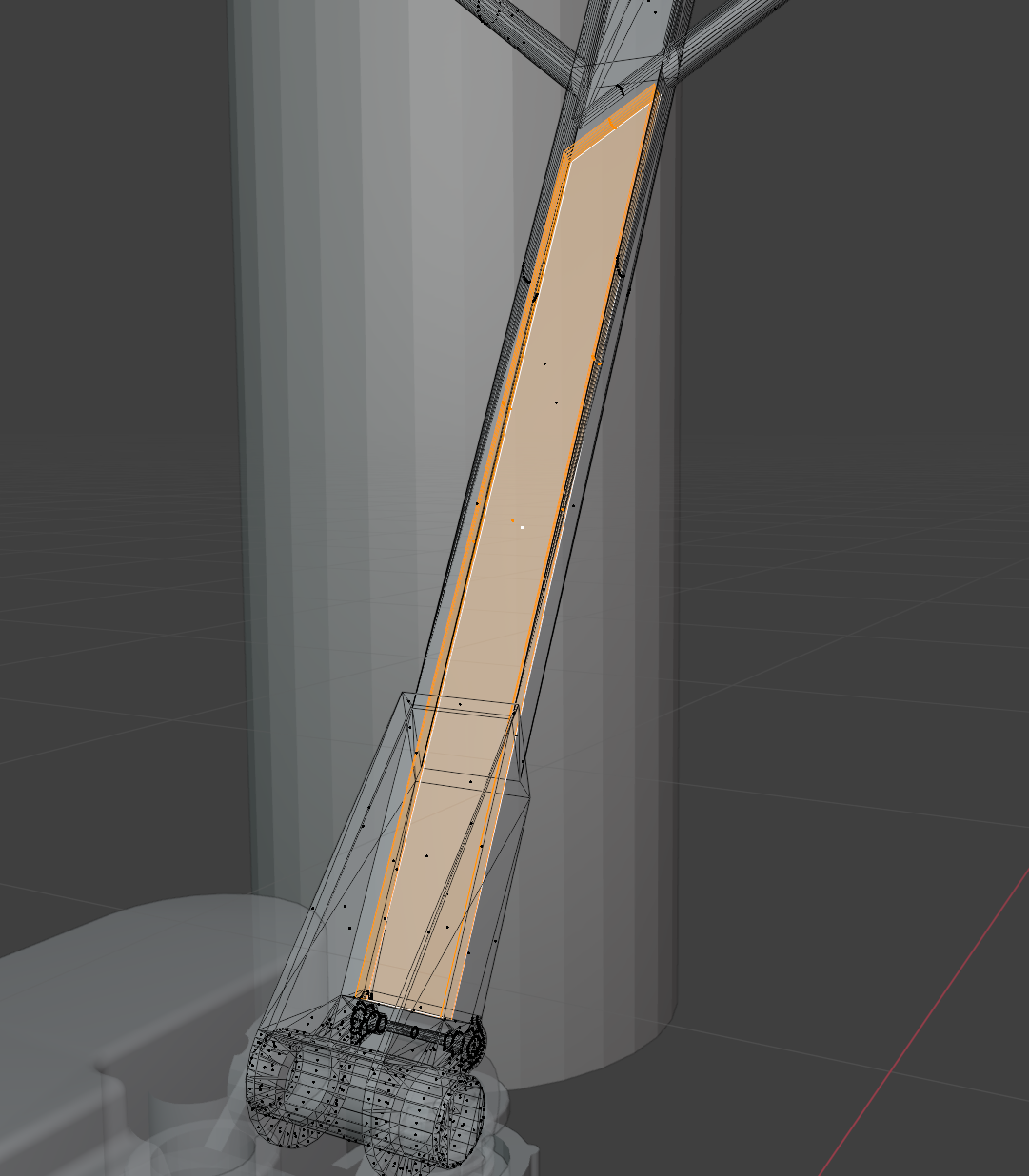
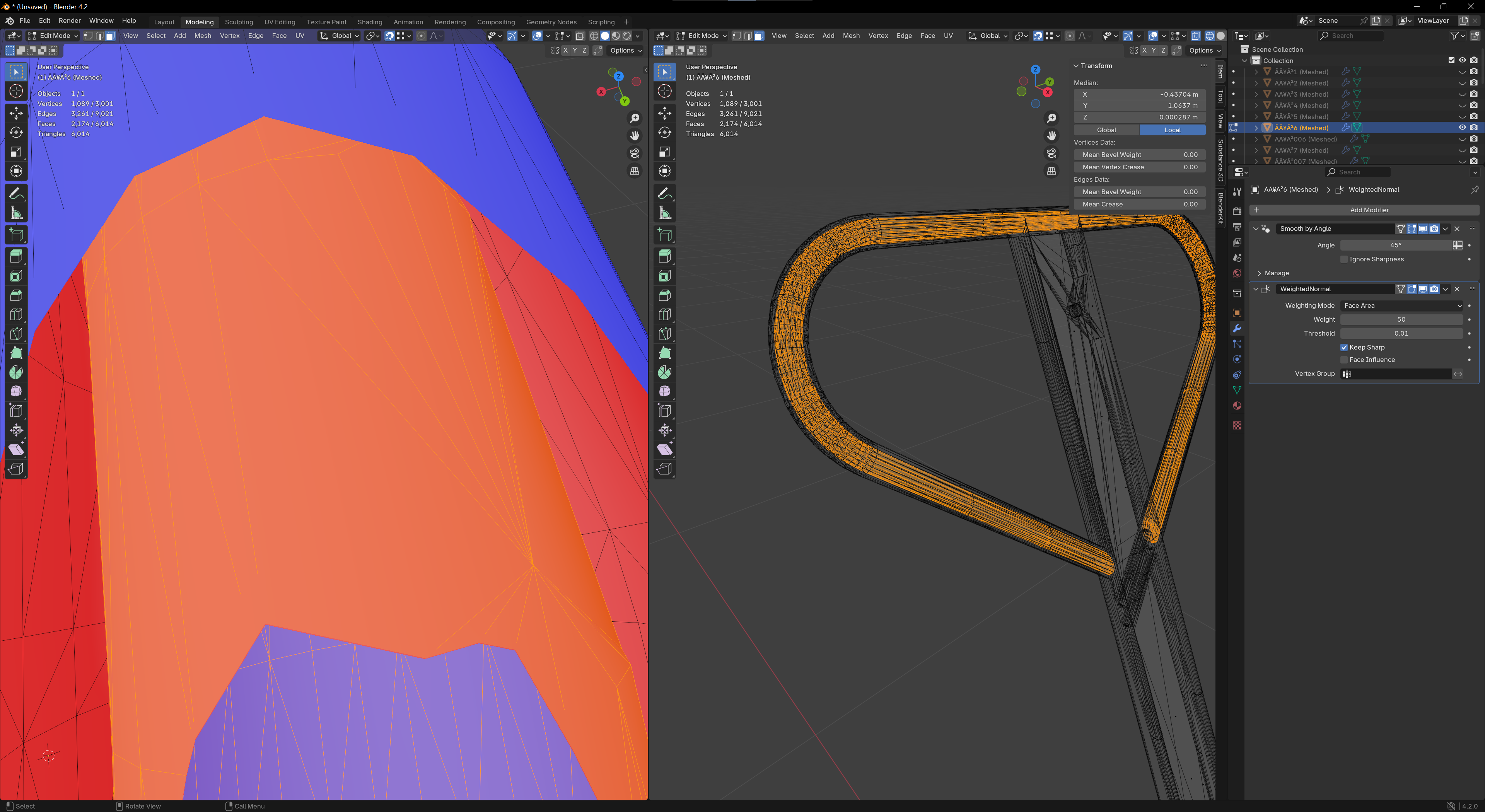
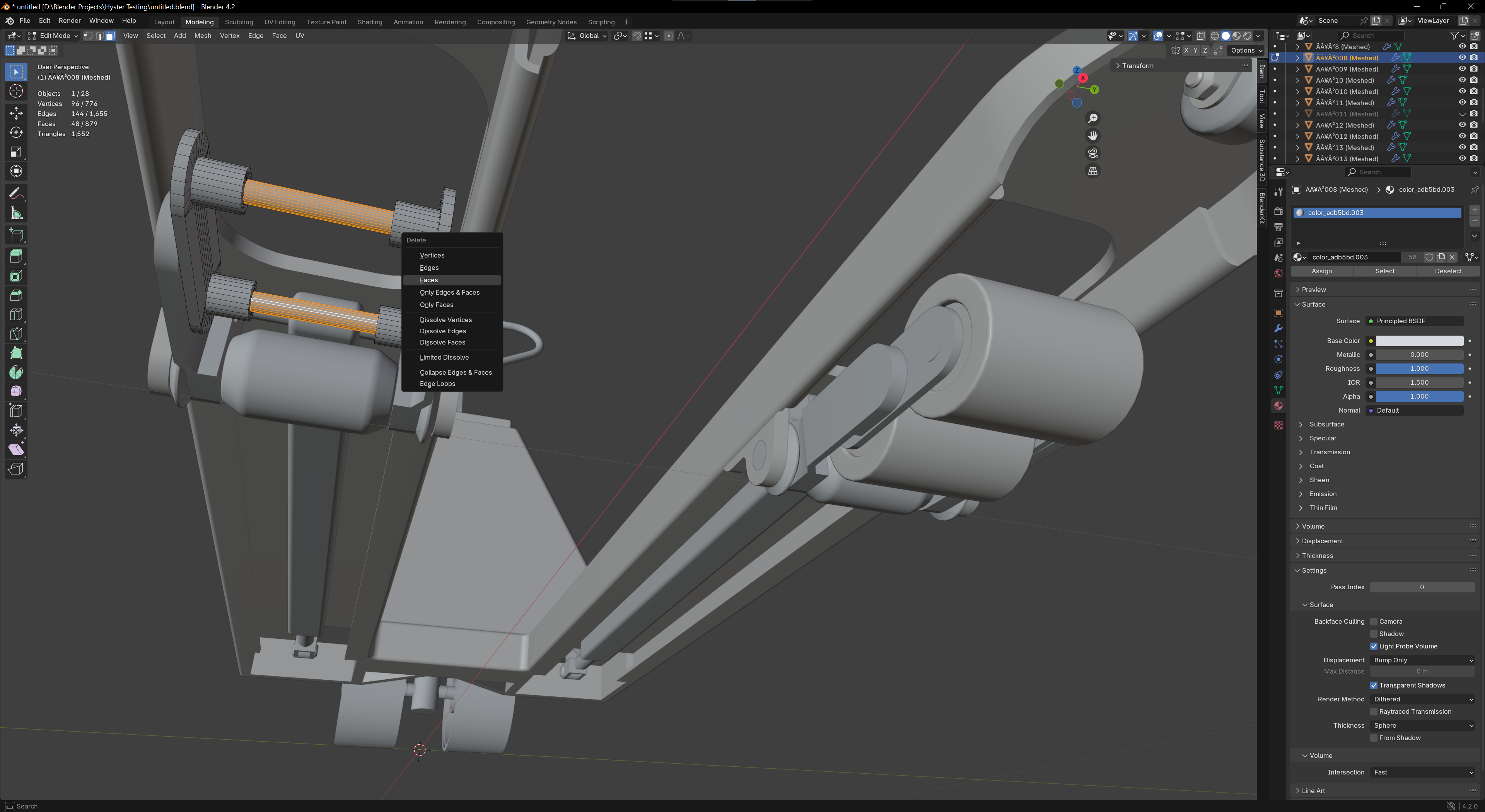
While cleaning up obvious manifold and internal geometry, I then apply number of different techniques depending on the issues I come across. Merging vertices and deleting any duplicates carried over is also key.
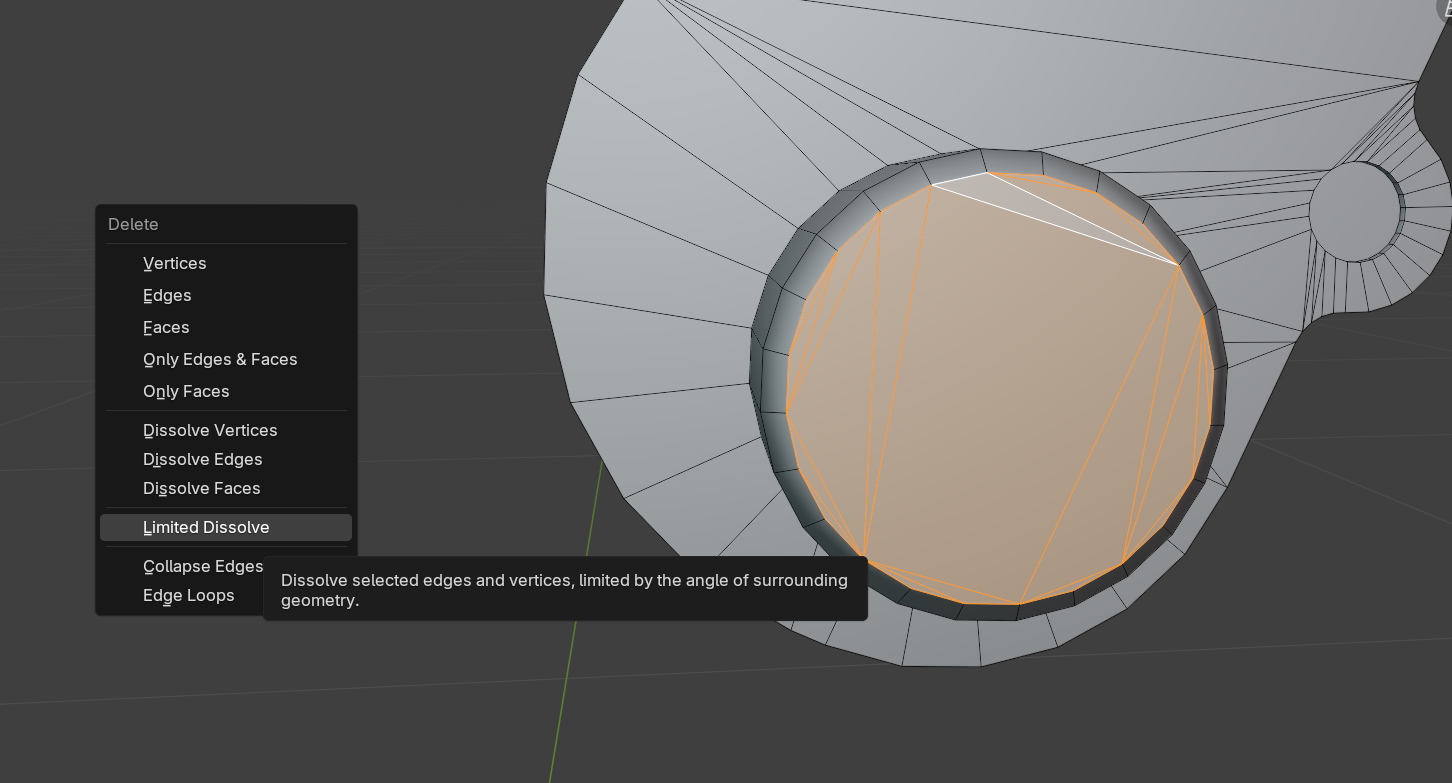
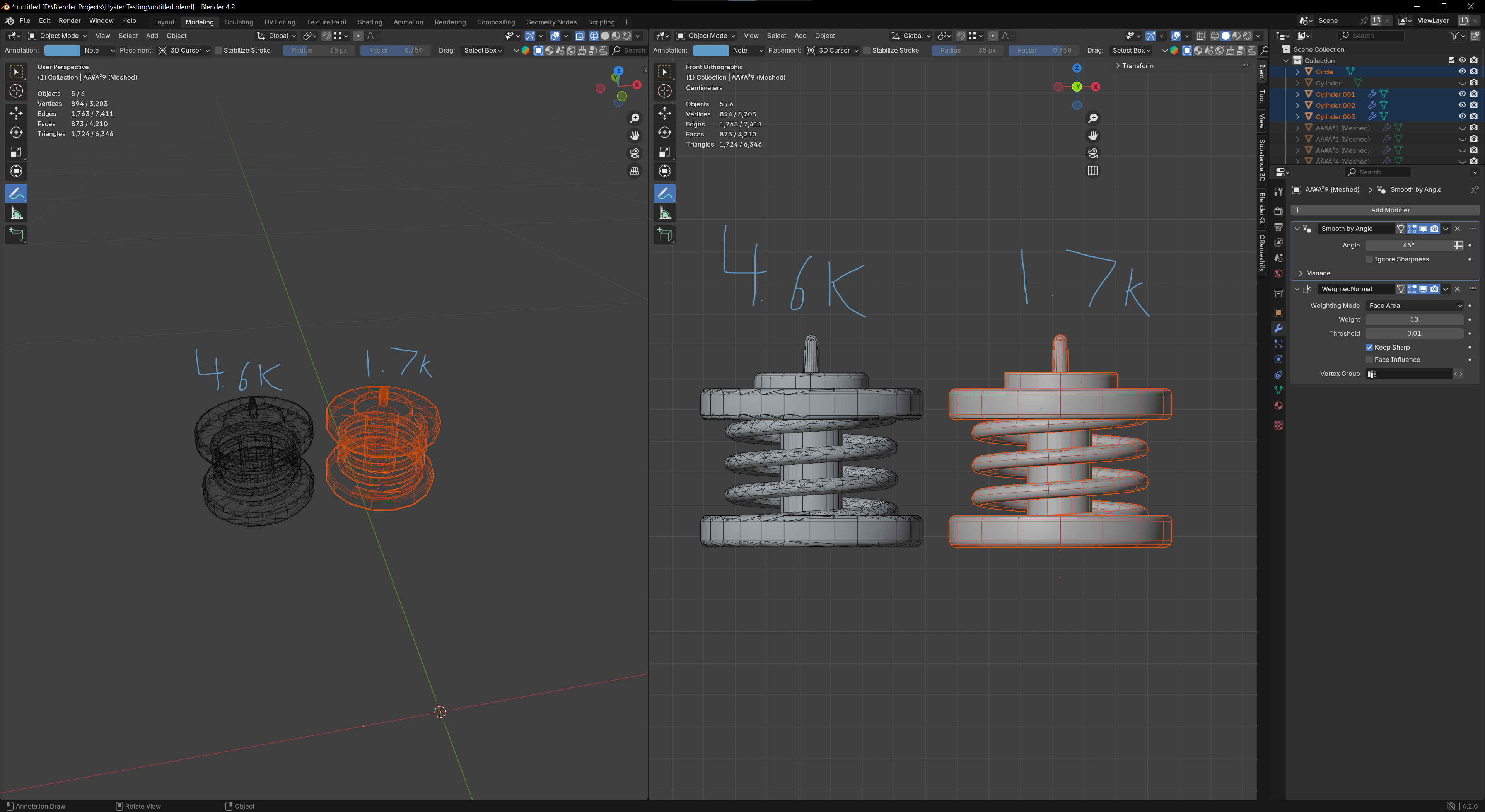
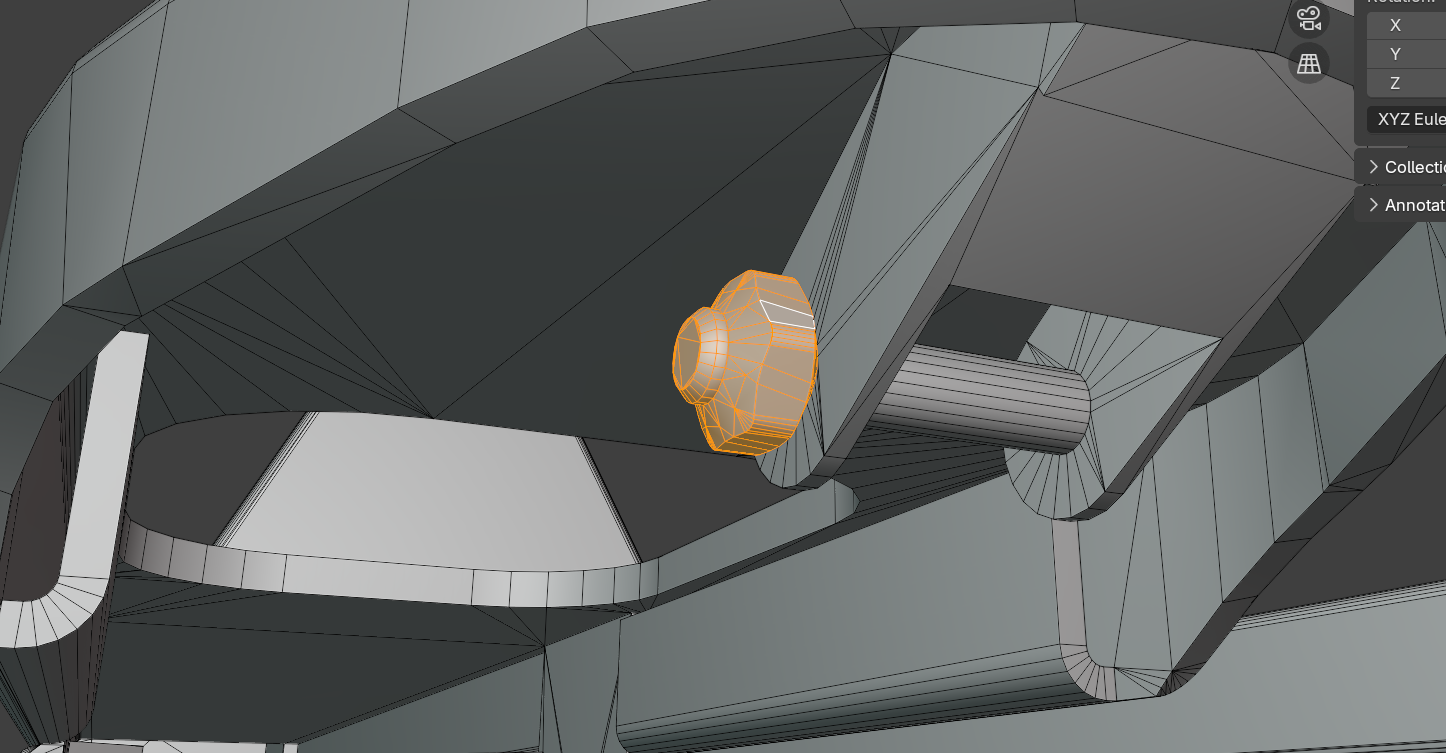
Limited Dissolve helps remove unnecessary tris on flat surfaces. The decimate modifier can be used on non-hero assets like undercarriage wheels to quickly reduce polycounts while maintaining shape. Cylinders can often be quickly remade with primitives. Bolts and screws, especially in rarely-seen views can often be completely removed.
Limited Dissolve helps remove unnecessary tris on flat surfaces. The decimate modifier can be used on non-hero assets like undercarriage wheels to quickly reduce polycounts while maintaining shape. Cylinders can often be quickly remade with primitives. Bolts and screws, especially in rarely-seen views can often be completely removed.
I added an HDRI, quick lighting setup and materials to showcase. Imported at 54k tris, this model was quickly taken to 34k tris for more efficiency in web configurators. Shading remains consistent in various lighting.
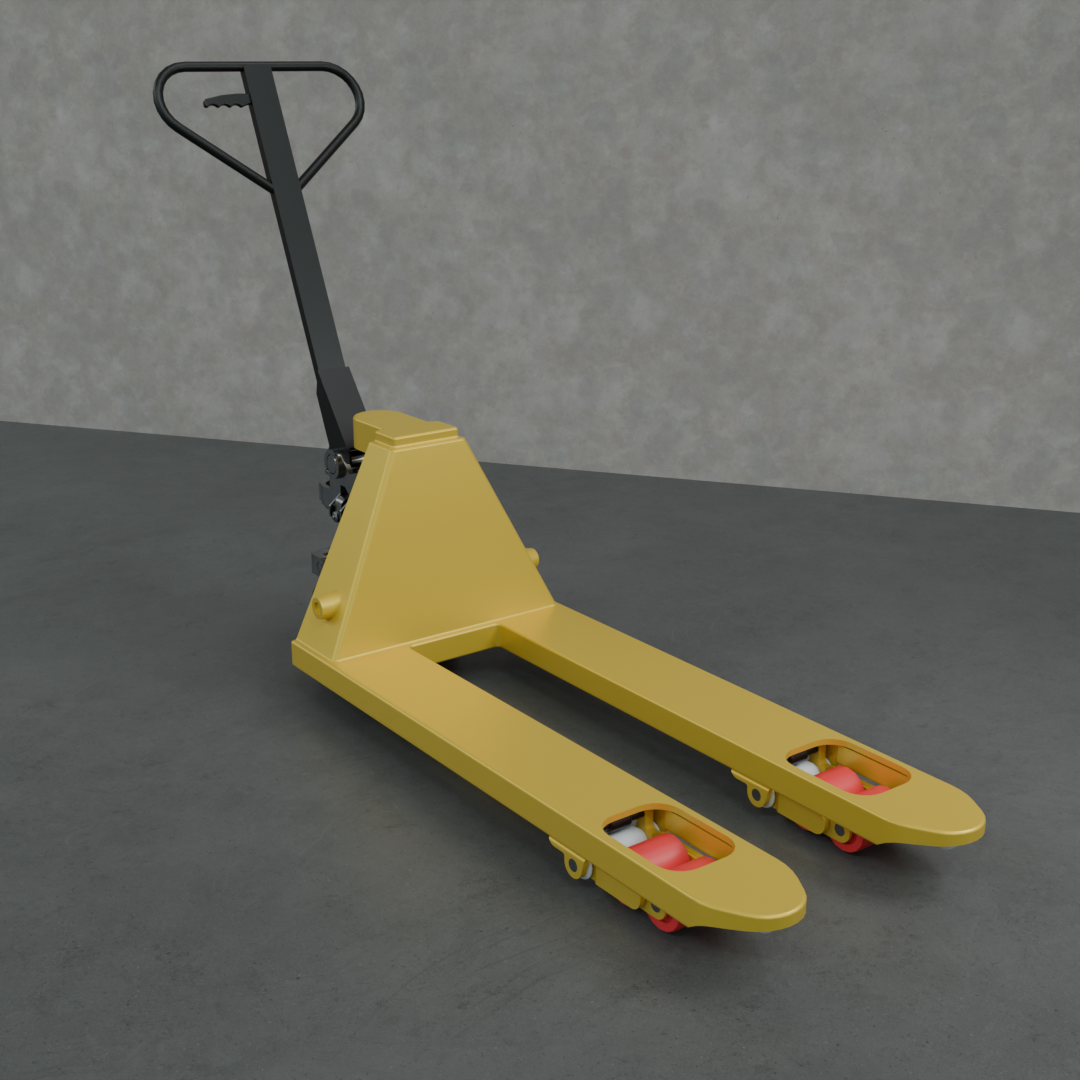
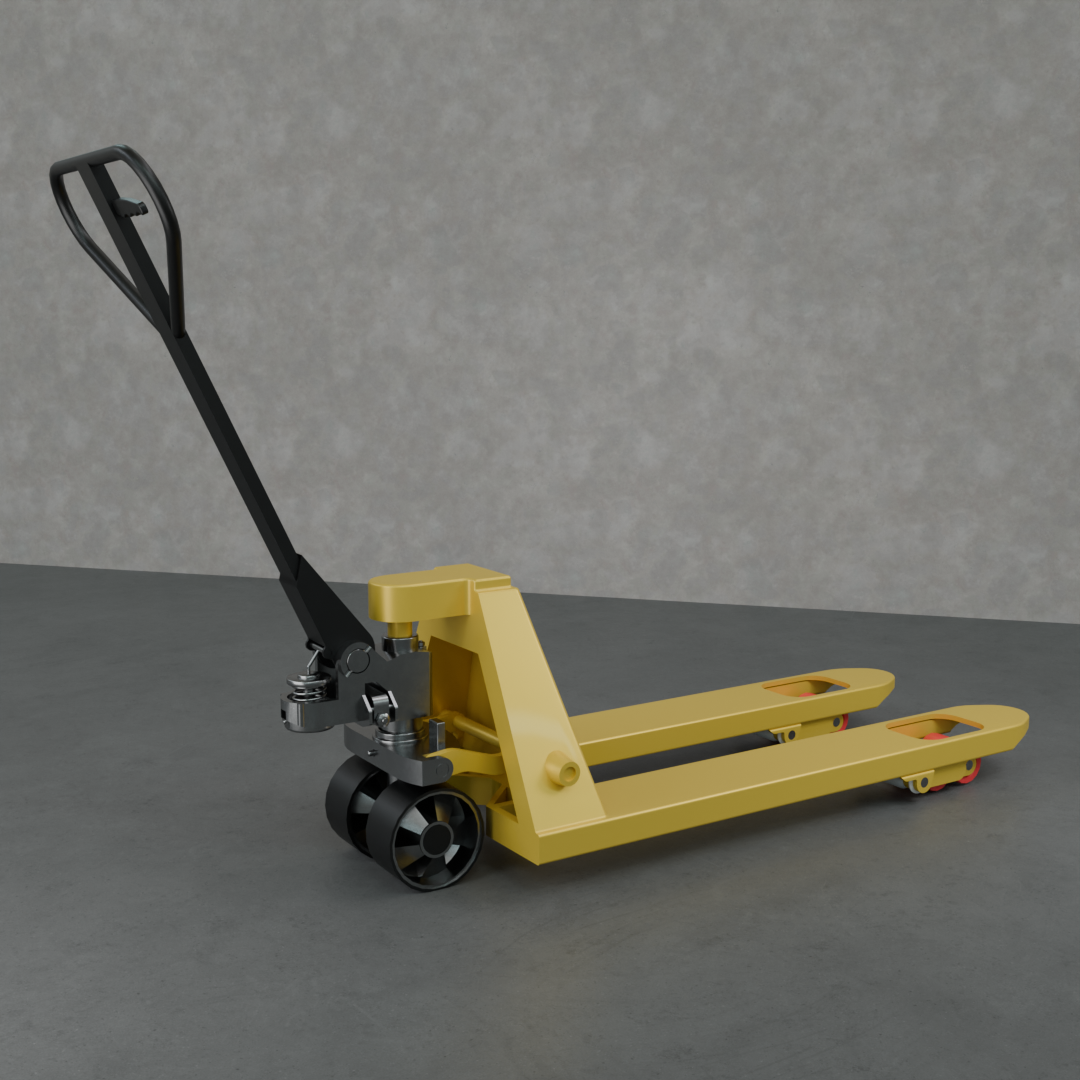
At this point UV unwrapping is done assets are textured with PBR wokflow in Substance Painter. The main chassis and handle will have higher texel density, whereas more hidden components will take up less of the UV space. GLB/GLTF format exports are often best for web configurators.